Honor the Contract
When disability pay becomes a budget offset, a promise is being renegotiated.
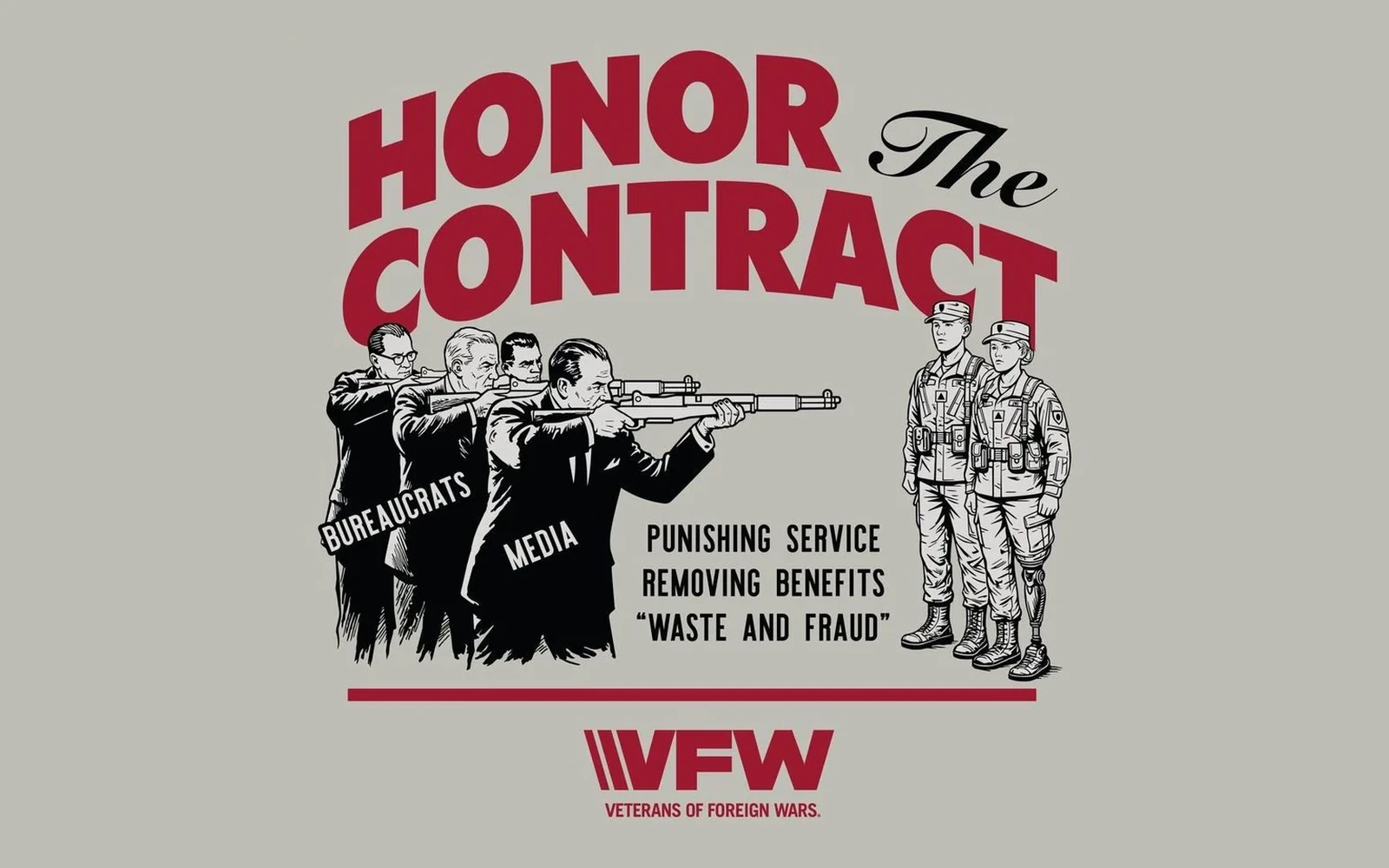
America Doesn’t Finance Tomorrow’s Wars on Yesterday’s Wounds
Every man and woman who raises their right hand signs a contract. Not the enlistment paperwork, a moral one. It says that if this nation sends us into harm’s way and we come home carrying the scars of that service, America will honor what it owes us. Not charity, not welfare, not some political favor handed down when it happens to be convenient. Compensation. That distinction is the whole argument.
Right now Congress is debating the Take Care of America’s Veterans Act, a package that finally moves on reforms the veteran community has chased for years — expanded caregiver support, improvements to veteran programs, and long-overdue measures like the Major Richard Star Act. A lot of it is good, many of these issues I have worked on with our partners and it deserves bipartisan support. But buried inside is one provision that ought to stop every veteran and every taxpayer cold. Congress is looking at paying for some of these reforms by cutting future compensation for veterans with certain service-connected disabilities. Strip away the budget language and what that means is using one veteran’s injuries to fund another veteran’s compensation. That cannot be allowed to become how Washington does business.
This Isn’t a Benefit
One of the biggest lies in Washington is that VA disability compensation is a “benefit.” It isn’t, and the difference matters. When a construction worker falls off scaffolding because the equipment failed, nobody calls his workers’ comp a government handout. It’s what he’s owed for an injury he took on the job. Military disability works the same way, except our bodies were the equipment. Our service is what broke them. The compensation exists because our health, our earning capacity, and our quality of life were permanently changed in the service of the United States. That’s payment on a debt the country ran up the day it put us in harm’s way.
This isn’t the first time Congress has choked on the cost of keeping its word. When we were fighting to pass the PACT Act, I spent six days on the steps of the Capitol with other veterans because we refused to accept that budget rules mattered more than the promises made to the men and women poisoned by burn pits and every other hazard of that war. The talking points back then sound exactly like the ones today — mandatory spending, budget scores, offsets, fiscal responsibility. Our answer didn’t move an inch.
The cost of a war doesn’t end when the shooting stops. It doesn’t vanish because the Congressional Budget Office slaps a number on it. It comes home with us in scarred lungs, traumatic brain injuries, toxic exposures, missing limbs, PTSD, and hearing that never comes back. Eventually Congress did the right thing and the PACT Act became law, because the country finally admitted something simple: caring for wounded veterans isn’t optional, it’s part of what national defense costs. That same truth is sitting right in front of them again.
America budgets to build the military. It budgets to fight our wars. Then, somehow, it turns caring for the people who fought them into an open question of whether we can afford it. That’s backward. Preparing for war, fighting it, and taking care of the warriors afterward are all part of the same invoice. The last one isn’t discretionary spending, it isn’t a social program, and it sure isn’t an entitlement. It’s the bill for defending this country.
We don’t pay for aircraft carriers by buying less ammunition. We don’t fund deployments by cutting combat pay. And we have no business funding veterans’ legislation by shrinking the compensation owed to the next generation of wounded.
None of this means the system gets a pass. At the Grunt Style Foundation we’ve spent years pushing for real reform — for informed consent, against a culture that over-prescribes, and in favor of cannabis research, psychedelic therapy, hyperbaric medicine, and other approaches to treating trauma that actually work. We’ve demanded accountability from an agency that too often calls it a win when it follows the process instead of when the veteran gets better. We want the VA modernized and we want care expanded, and plenty of what’s in this bill moves in that direction. But those reforms have to stand on their own and be paid for on their own. Funding them out of the pockets of future wounded veterans is a separate conversation, and a shameful one.
Honor the Contract
The VFW put it about as plainly as it can be put: Honor the Contract. That contract was never between Republicans and Democrats, or between Congress and the VA. It’s between the American people and every citizen who answered the call. If these reforms are worth doing — and many of them are — then Congress should fund them. Cut the bureaucracy, kill the waste, root out the fraud, and find the efficiencies, because there’s plenty of all of it to find. What Washington cannot do is ask wounded veterans to cover the tab with the value of their own injuries. The moment disability compensation becomes a budget offset instead of an earned obligation, we’ve started renegotiating a promise that was never supposed to be on the table.
Veterans aren’t asking for special treatment. We’re asking the government to keep its word as did the veterans of the Bonus Army.
The Grunt Style Foundation has always believed veterans deserve better care, stronger research, and real outcomes — not just a bigger government. We back reform because we believe the system can get better. It just can’t get better by shoving the cost of national defense onto the next generation of wounded warriors. America ran up that debt the day they were injured in its service. It should pay it in full.
Honor the Contract.