U.S. Moves to Block Adversaries’ Oil Trade With Maritime Seizures
On Wednesday, two “ghost fleet” ships with links to Russia and China
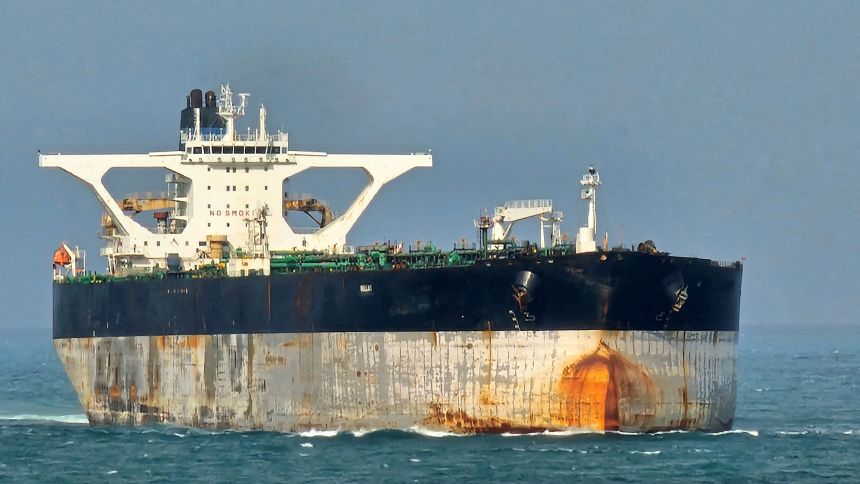
With Venezuela’s Maduro regime toppled, the United States military now has turned its focus to halting America’s adversaries from taking oil. On Wednesday, two “ghost fleet” ships with links to Russia and China were seized and boarded by American forces.
Previously named the Bella 1, the Marinera is part of Russia’s shadow fleet of tankers carrying oil in violation of America’s sanctions. Previously, the Russian-flagged watercraft had evaded capture in the Caribbean at a maritime blockade slightly over two weeks ago. United States forces seized it in the North Atlantic, between Iceland and Scotland. The Marinera was followed through the Atlantic by a Russian submarine. Upon its capture, it was in close vicinity to Russian military vessels. The risk of a United States-Russia competition was particularly perilous as President Donald Trump attempts to defrost relations with Vladimir Putin. The vessel originally sailed from Iran to Venezuela where it then narrowly evaded capture by America.
The capture of the Marinera was made possible by British assistance. Early in the week, a number of United States military aircraft were dispatched to United Kingdom Air Force bases. It was believed they were moved with the intent to seize the vessel. The British Royal Air Force and one Royal Navy vessel supported the operation. It is still unclear who is involved, but Western defense sources claim that United States Special Operations Forces (SOF) boarded the ship before transferring it to the Coast Guard. A statement from Moscow mentioned United States Navy forces, suggesting that the SEALS were most likely involved. The British Defence Secretary John Healy claims that the ship also aided and abetted Hezbollah activities.
A United States European Command (EUCOM) social media statement has confirmed the seizure of the ship as a larger mission of targeting sanctioned vessels. Moscow’s Transport ministry claimed they lost transport with the vessel after American Naval forces boarded it. Citing the 1982 United Nations Convention on Law of the Sea, a United Russia politician accused America of “blatant piracy”.
On the same day, the United States Coast Guard captured another oil tanker in the Caribbean. This vessel, the Sophia, was categorized by the United States Southern Command (SOUTHCOM) as “a stateless, sanctioned dark fleet motor tanker” that was “operating in international waters and conducting illicit activities in the Caribbean Sea”. It is estimated to have been carrying 2 million barrels of Venezuelan oil according to oil market analyst Emmanuel Belostrino. The Sophia is believed to have Chinese connections.
The seizure of sanctioned oil tankers signals a shift in how the United States is enforcing economic warfare at sea. What was once limited to financial penalties and diplomatic pressure is increasingly backed by naval power and direct interdiction. As adversaries rely more heavily on shadow fleets to evade sanctions, maritime enforcement is likely to become a more common–and more contested feature of great-power competition. These operations may curb illicit oil flows in the short term, but they also raise the risk of confrontation in crowded international waters where miscalculation carries global consequences.