%201.svg)


%201.svg)


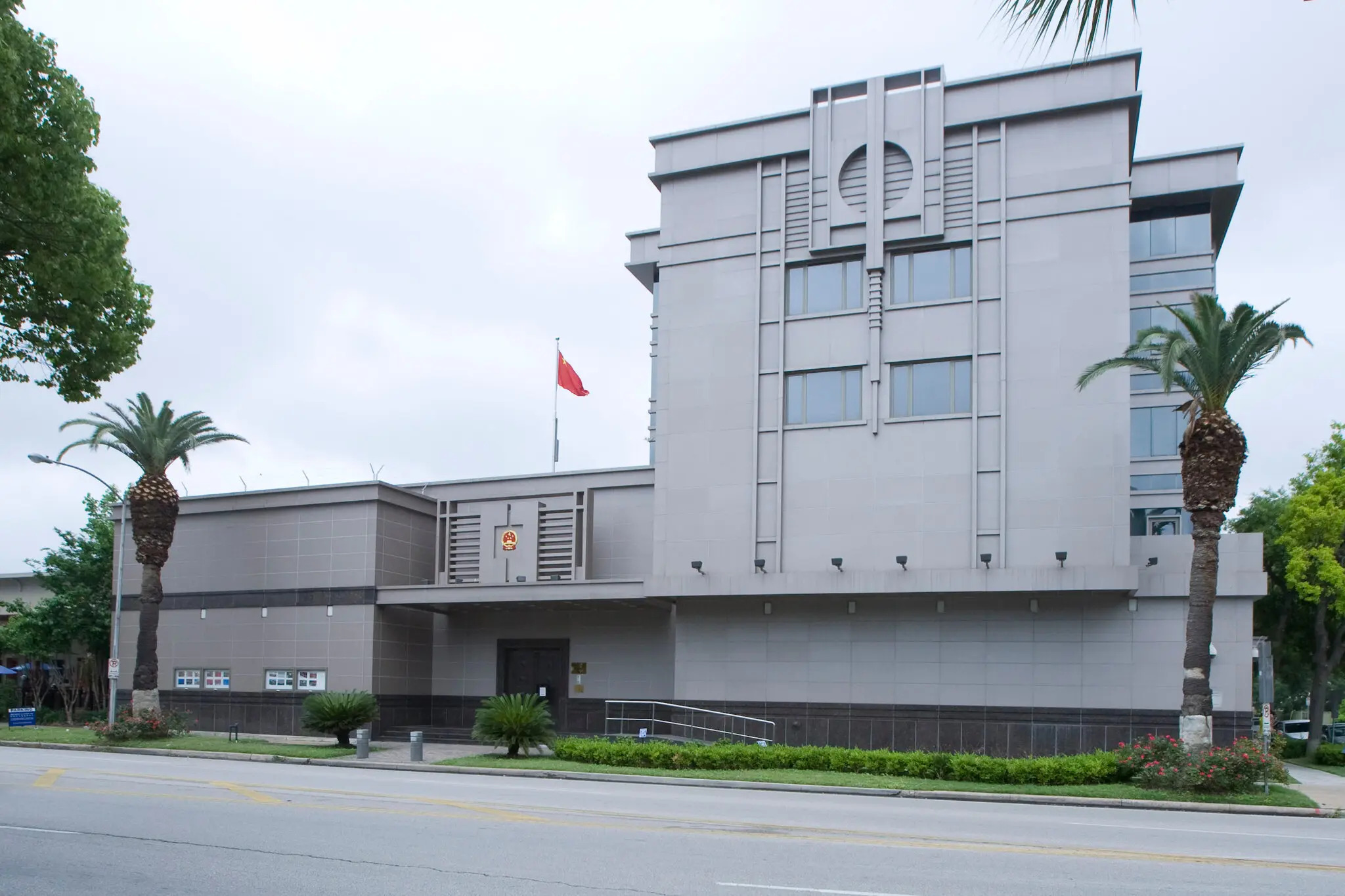


In a series of recent law enforcement actions, Houston has emerged as a significant hub in the United States' efforts to counter espionage activities directed by the People's Republic of China. The Department of Justice has unsealed charges in two separate, high-profile cases with direct links to the city, one involving the arrest of an alleged intelligence operative targeting the U.S. Navy and the other charging a state-sponsored hacker who stole research from local universities.
The first case materialized on June 27, 2025, when the FBI arrested Chinese national Liren “Ryan” Lai in Houston. According to the federal criminal complaint, Lai and a co-defendant, Yuance Chen, were acting as illegal agents for China's Ministry of State Security, the country's main civilian intelligence agency. The duo allegedly worked under the direction of an MSS officer to gather intelligence on U.S. military personnel and installations.
Prosecutors allege that Lai, who arrived in Houston on a tourist visa, and Chen were tasked with identifying and assessing potential U.S. military members for recruitment. Their alleged activities included facilitating a "dead drop" of cash to an individual they believed was a U.S. Navy asset and photographing sensitive information from a bulletin board at a Navy recruitment center. Both men are charged with acting as an agent of a foreign government without notifying the U.S. Attorney General, a charge that underscores the covert nature of their alleged mission.
In a parallel development announced in early July, federal prosecutors in Houston unsealed an indictment against another Chinese national, Xu Zewei. Xu was arrested in Italy at the behest of the United States and is currently awaiting extradition. The arrest warrant and indictment against him were issued from the U.S. Attorney's Office for the Southern District of Texas, based in Houston.
Xu is accused of being a key member of the prolific, state-sponsored hacking group known as "HAFNIUM." The indictment alleges that, at the direction of the MSS, Xu and his co-conspirators hacked into the computer networks of numerous American companies and institutions. A primary focus of the campaign was the theft of sensitive data, including cutting-edge research related to the COVID-19 pandemic from several U.S. universities, at least two of which are located in the Houston area.
Though the methods differed (one case involving traditional human intelligence and the other sophisticated cyber espionage) U.S. officials state that both operations were directed by the same Chinese intelligence service. While these are hardly the only spies sent to the US by the PRC, these cases highlight what the FBI describes as an aggressive, multi-pronged strategy by the PRC to illicitly acquire U.S. military secrets and advanced technological research. The focus on Houston, a major center for the energy sector, medical research, and military logistics, underscores the city's status as a high-value target for foreign intelligence services. These recent enforcement actions signal a robust U.S. counterintelligence response to these persistent threats.