%201.svg)


%201.svg)


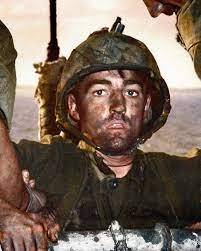


Let's cut the crap. You’re home. You’re "safe." You’re supposed to be "normal." But you feel lost, don't you? You feel like a puzzle piece from a different box, jammed into a picture that doesn't make sense. People look at you and see a civilian, but you look in the mirror and see someone who's still on watch.
The world went quiet, but your head didn't.
You’ve heard the word. Maybe you’ve even used it yourself. "Broken." You feel it when you can't connect with old friends, when a loud noise sends you through the ceiling, or when the sheer, pointless calm of a Tuesday afternoon feels suffocating. You feel "broken" because the person you were before you signed the papers is gone, and this new person doesn't fit in with the life you came back to.
I'm here to tell you one thing; you are not broken.
"Broken" is what happens to a glass when it's dropped. It shatters, and it’s useless. It gets swept up and thrown away. That is not you.
You are battle-tested.
Think about it. At the risk of using an old trope, a piece of steel is just steel. But when you heat it in a forge, hammer it, quench it, and sharpen it, it’s not "broken." It’s a blade. It’s been through a process that has fundamentally changed it, tested it, and proven its strength. You have been through the forge. The things you carry, the memories, the reflexes, the scars, the dark humor, are not defects. They are adaptations.
That hyper-vigilance that makes you hate crowds? That’s not a disorder. That’s a finely tuned threat-assessment skill that kept you and your buddies alive. That inability to tolerate workplace drama? That’s not a social failure. It’s a deep, ingrained understanding of what a real problem looks like. That feeling of disconnect? It’s the logical result of walking in two worlds at once.
You have seen humanity at its absolute worst and its absolute best, sometimes in the same five minutes. You have operated in an environment where trust is total, communication is direct, and your purpose is clear; look out for the person to your left and your right.
Now, you’re in a world where "emergency" means the Wi-Fi is down, and "teamwork" means not stealing someone's yogurt from the office fridge. It’s a culture shock no one can prepare you for. Feeling lost isn't a sign of weakness; it’s a sign that you are a warrior without a war. Your mission is over, but the instincts remain.
So, what now?
This is the new mission, and it's harder than any ruck march. Your new objective is to translate, not "fix." It’s to learn how to adapt those battle-tested skills to a new battlefield. That vigilance can become attention to detail. That protective instinct can make you a fierce leader, parent, or friend. That resilience can get you through any civilian setback.
This isn't about "getting back to normal." There is no "back." There is only forward. You will not be the person you were before. You are something more. You are a graduate of an experience few can comprehend. Stop seeing yourself as a liability. You are an asset. You've endured. You've survived. You're still here.
You’re not broken. You’re proven.