I’m All In - How a Vietnam Veteran’s Desperate Gamble in Vegas Saved FedEx
Sometimes you just have to swing for the fences to make your dream happen.
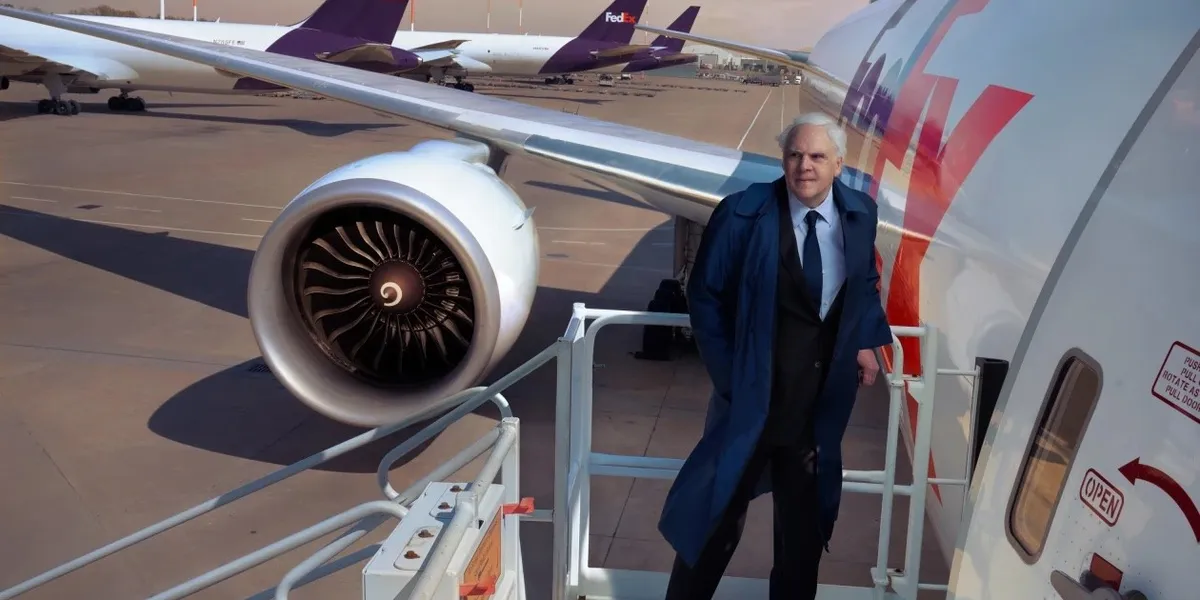
In the high-stakes world of startups, founders often speak of betting it all on a good idea. For Frederick W. Smith, the founder of Federal Express, that metaphor became a literal reality. In 1973, just two years after its founding, the future billion-dollar logistics empire was on the verge of collapse, its planes nearly grounded. In a moment of sheer desperation, the Vietnam veteran took the company’s last few thousand dollars, flew to Las Vegas, and played blackjack in a risky, last-ditch effort to save his dream.
Fresh from two tours of duty in Vietnam, Fred Smith launched his revolutionary concept in 1971: a reliable, overnight airfreight service that could connect the entire country. The idea, which he had famously outlined in a Yale economics paper (that earned him a C grade), was ambitious and capital-intensive. It required planes, sorting hubs, and a massive logistical network. By 1973, after burning through his $4 million inheritance and millions more from investors, FedEx was in a tailspin. Soaring jet fuel prices, coupled with unexpected operational costs, were draining the company’s coffers. The company was reportedly losing over $1 million a month.
The breaking point came when a crucial funding request from General Dynamics was denied. With only about $5,000 left in the company’s bank account, Smith was facing bankruptcy. He was unable to cover the $24,000 needed for jet fuel to keep his fleet of Dassault Falcon 20s flying the following week. The company’s payroll checks were also set to bounce. The dream was over.
Or so it seemed. Instead of conceding defeat, Smith did something that would become a corporate legend. He withdrew the remaining $5,000, flew to Las Vegas, and sat down at a blackjack table. It was a move born not of recklessness, but of a profound belief in his vision and a refusal to surrender, a trait likely honed during his time as a U.S. Marine Corps officer.
Robert Frock, a former senior vice president at FedEx, recalled the shock when he learned what had happened. In his book, Changing How the World Does Business, Frock recounts questioning Smith about the sudden appearance of funds in their bank account. "I said, ‘You mean you took our last $5,000… how could you do that?’ He shrugged and said, ‘What difference does it make? Without the funds for the fuel companies, we couldn't have flown anyway.’"
Against all odds, Smith’s gamble paid off. By Monday morning, he had turned the initial $5,000 into $27,000; just enough to cover the fuel bill and keep the planes in the air for a few more days.
That small victory was more than just a financial reprieve; it was a critical injection of morale. The winnings provided the crucial bridge that allowed FedEx to operate long enough for Smith to secure more substantial and legitimate funding. His unwavering commitment, demonstrated on that audacious trip to Vegas, helped convince investors that he would do whatever it took to succeed. Within a few years, FedEx achieved profitability, and by 1976, it posted its first profit of $3.6 million.
Fred Smith's trip to Vegas was not a sustainable business strategy, but it was a testament to the grit and unconventional thinking that defined FedEx in its infancy. It was the ultimate bet on an idea that would go on to change global commerce forever.